


Moroccan Eating Etiquette: Master Dining with Locals – Essential Guide
- Moroccan Eating Etiquette: Master Dining with Locals – Essential Guide
- The Importance of Respect and Hospitality
- Handwashing: A Ritual of Purity and Togetherness
- The Communal Plate: Sharing and Connection
- Using Your Right Hand: A Matter of Tradition
- Bread: The Staff of Life
- Tea Time: A Symbol of Hospitality and Relaxation
- Navigating Social Interactions: Key Considerations
- Moroccan Eating Etiquette: Common Mistakes to Avoid
- Modern Adaptations and Regional Variations
- Enjoying the Experience: Embracing the Culture
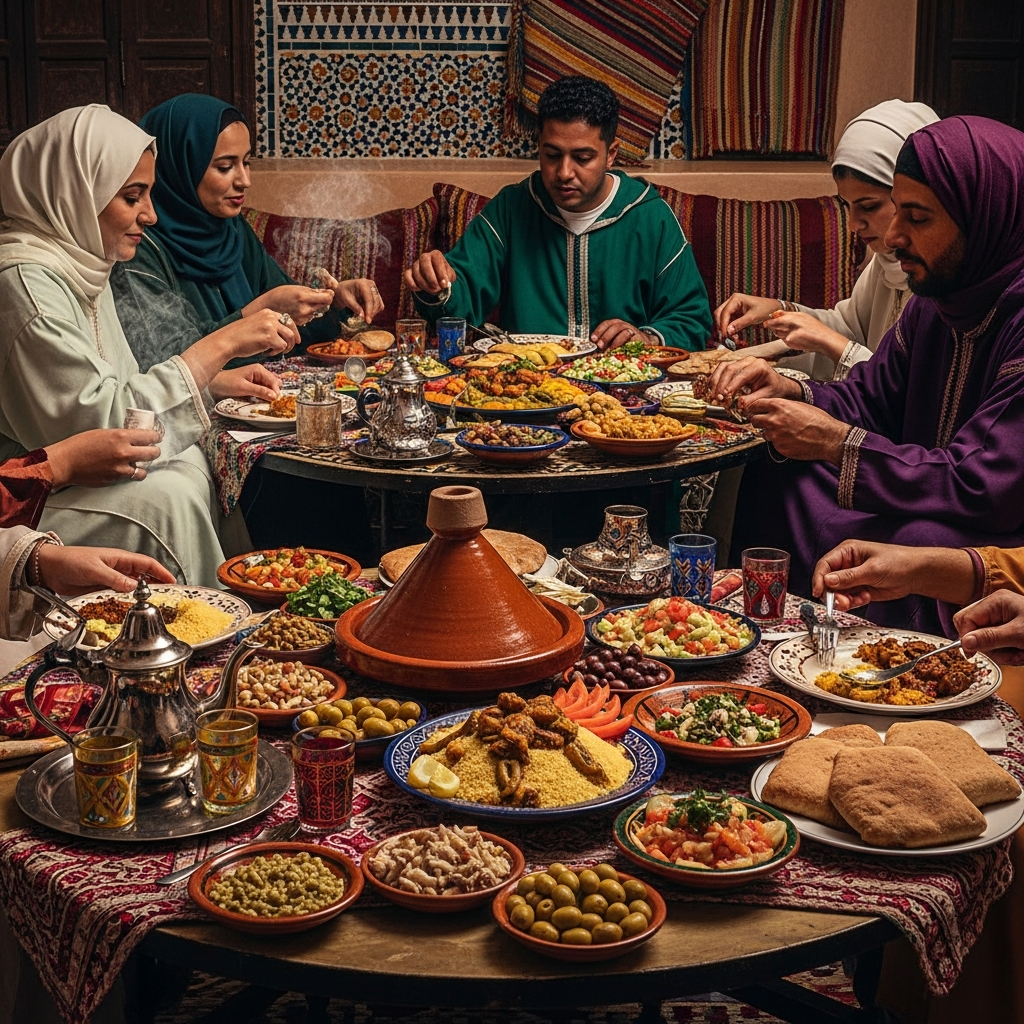
Moroccan eating etiquette is more than just knowing which fork to use. It’s about understanding a rich tapestry of customs, traditions, and social nuances that have been passed down through generations. Dining in Morocco is a communal experience, a celebration of hospitality, and a window into the heart of Moroccan culture. To truly connect with locals and enjoy the warmth of Moroccan hospitality, understanding these unspoken rules is essential. This guide will equip you with the knowledge to navigate the Moroccan dining scene with grace and confidence, ensuring a memorable and respectful experience.
The Importance of Respect and Hospitality
Before diving into the specifics, it’s crucial to understand the underlying principles that govern Moroccan dining. Respect for elders, family, and guests is paramount. Hospitality, known as “diafa,” is a cornerstone of Moroccan culture, and sharing a meal is a way to express generosity and welcome. This translates into a relaxed and convivial atmosphere where conversation flows freely, and the emphasis is on enjoying the company as much as the food.
Handwashing: A Ritual of Purity and Togetherness
The dining experience often begins with a ritual handwashing. A server will typically bring a basin, a pitcher of warm water (often scented with rosewater), and a towel for guests to cleanse their hands. This is not just about hygiene; it’s a symbolic act of purification and a way to signal the start of the meal. It’s customary to pour water for the person to your right, starting with the eldest or most honored guest. Accepting this gesture with a slight bow and a murmured “Shukran” (thank you) is a sign of respect.
The Communal Plate: Sharing and Connection
A defining characteristic of Moroccan dining is the communal serving dish. Large platters, often laden with tagine, couscous, or other traditional dishes, are placed in the center of the table for everyone to share. This practice fosters a sense of togetherness and encourages interaction.
When eating from a communal dish, always eat from the section directly in front of you. Avoid reaching across the platter or taking the best pieces first. Instead, focus on the portion closest to you and eat in a clockwise direction. Remember, the goal is to leave enough for everyone else to enjoy.
Using Your Right Hand: A Matter of Tradition
Traditionally, Moroccans eat with their right hand. The left hand is considered unclean and is generally not used for eating. While some modern households may use cutlery, especially when serving Western-style dishes, it’s always respectful to inquire about the preferred method before digging in.
When eating with your hand, use your thumb, index finger, and middle finger to scoop up the food. Avoid touching the food with your palm or other fingers. Practice makes perfect, and don’t be afraid to ask for guidance if you’re unsure.
Bread: The Staff of Life
Bread, or “khobz,” is an essential part of every Moroccan meal. It’s used not only as a side dish but also as a utensil for scooping up sauces and stews. Always tear off a piece of bread with your right hand and use it to gather the food from the communal platter. Never cut the bread with a knife, as this is considered impolite.
Furthermore, never place bread upside down on the table, as this is seen as disrespectful. If you drop a piece of bread, pick it up and kiss it as a sign of respect before discarding it. Bread is considered a blessing, and wasting it is frowned upon.
Tea Time: A Symbol of Hospitality and Relaxation
Moroccan mint tea, or “atay,” is more than just a beverage; it’s a symbol of hospitality and a central part of Moroccan social life. Offering tea to guests is a sign of welcome and friendship. Accepting the tea is considered polite, even if you’re not particularly thirsty.
The tea is typically poured from a height, creating a frothy head and ensuring that the tea is well-mixed. The first glass is usually the strongest and most bitter, while the subsequent glasses become sweeter. It’s customary to drink at least three glasses of tea, as refusing would be considered impolite. When finished, simply tilt your glass slightly to signal that you don’t want any more.
Navigating Social Interactions: Key Considerations
Beyond the specific rules regarding food and drink, several social considerations are important to keep in mind when dining with Moroccans.
Dress modestly: While Morocco is becoming increasingly modern, it’s still a relatively conservative country. Dressing modestly, especially when dining in a traditional setting, is a sign of respect.
Be punctual: Arriving on time for a meal is generally appreciated, although Moroccans tend to be more relaxed about punctuality than Westerners.
Engage in conversation: Dining is a social occasion, and engaging in conversation is expected. Ask questions about Moroccan culture, express your appreciation for the food, and be open to sharing your own experiences.
Compliment the host: Expressing your appreciation for the meal and the hospitality of your host is always a welcome gesture. A simple “Shukran bezzaf” (thank you very much) or “Kulshi bnin” (everything is delicious) will go a long way.
Offer to help: While your host may insist on doing everything, offering to help with the preparation or cleaning up shows your appreciation and willingness to participate.
Be mindful of dietary restrictions: If you have any dietary restrictions, such as allergies or preferences, inform your host in advance. Moroccans are generally accommodating and will do their best to cater to your needs.
Moroccan Eating Etiquette: Common Mistakes to Avoid
Even with the best intentions, it’s easy to make a faux pas when navigating unfamiliar customs. Here are some common mistakes to avoid:
Eating with your left hand: As mentioned earlier, the left hand is considered unclean. Always use your right hand for eating.
Reaching across the platter: Avoid reaching across the communal dish to grab a particular piece of food. Instead, focus on the portion directly in front of you.
Taking the best pieces first: Let others have a chance to enjoy the best pieces before taking them for yourself.
Wasting food: Food is considered a blessing, and wasting it is frowned upon. Take only what you can eat and avoid leaving excessive leftovers on your plate.
Refusing tea: Refusing tea is considered impolite. Accept the offer and drink at least three glasses, even if you’re not particularly thirsty.
Talking with your mouth full: This is considered impolite in most cultures, and Morocco is no exception.
* Discussing sensitive topics: Avoid discussing sensitive topics, such as politics or religion, especially with people you don’t know well.
Modern Adaptations and Regional Variations
While the traditional customs outlined above are still widely observed, Moroccan eating etiquette is evolving with the times. In more urban and modern settings, cutlery is becoming increasingly common, and some of the more traditional customs may be less strictly enforced.
Additionally, regional variations exist in Moroccan cuisine and dining habits. For example, in some regions, it’s customary to eat with spoons, while in others, it’s more common to use bread. Being observant and adaptable is key to navigating these variations.
Enjoying the Experience: Embracing the Culture
Ultimately, the most important aspect of Moroccan eating etiquette is to relax, be respectful, and enjoy the experience. Embrace the communal nature of the meal, engage in conversation, and be open to learning about Moroccan culture. By showing respect for the traditions and customs of your hosts, you’ll create a positive and memorable dining experience that will strengthen your connection with the people and culture of Morocco. Remember that Moroccans are incredibly hospitable and understanding, and they will appreciate your efforts to learn and respect their customs, even if you make a few mistakes along the way. The key is to be genuine, respectful, and open to embracing the unique charm of Moroccan dining.