


Moroccan Desserts: 10 Best Traditional Pastries You Must Try!
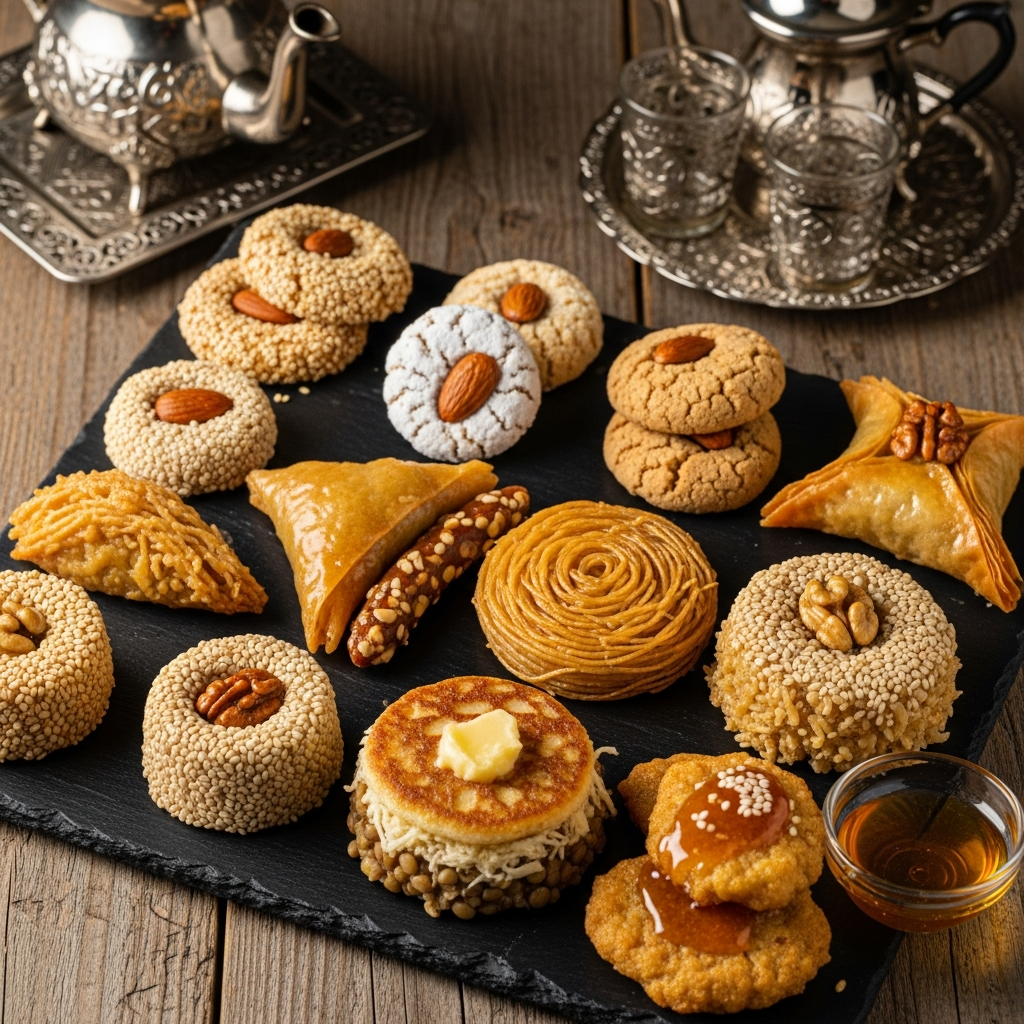
- Moroccan Desserts: 10 Best Traditional Pastries You Must Try!
- 1. Kaab el Ghazal (Gazelle Horns): The Epitome of Moroccan Elegance
- 2. Chebakia: A Honey-Glazed Delight
- 3. Briouats: Sweet and Savory Variations
- 4. Sellou (Sfouf): A Celebration of Nuts and Seeds
- 5. Ghriba: Crumbly Cookies with a Variety of Flavors
- 6. M’hencha: A Serpentine Almond Pastry
- 7. Pastilla au Lait: A Sweet and Savory Combination
- 8. Feqqas: Twice-Baked Almond Biscuits
- 9. Halwa: A Variety of Sweet Confections
- 10. Orange Salad with Cinnamon and Orange Blossom Water: A Refreshing Finale
Moroccan desserts are a symphony of flavors, textures, and aromas, reflecting the country’s rich cultural heritage and culinary expertise. These sweet treats are more than just a way to end a meal; they’re an integral part of Moroccan social life, often enjoyed during special occasions, family gatherings, and celebrations. From the fragrant spices to the delicate pastries and the generous use of nuts and honey, each bite is an experience in itself. This article explores ten of the best traditional Moroccan desserts that you absolutely must try when visiting Morocco or looking to recreate authentic flavors at home.
1. Kaab el Ghazal (Gazelle Horns): The Epitome of Moroccan Elegance
Kaab el Ghazal, meaning “gazelle horns,” is arguably the most iconic of all Moroccan pastries. These delicate, crescent-shaped cookies are a testament to Moroccan pastry-making artistry. The thin, melt-in-your-mouth pastry encases a fragrant almond paste filling, subtly flavored with orange blossom water and a touch of cinnamon. The dough, often made with finely ground almonds and sugar, is incredibly delicate and requires skillful handling.
The preparation of Kaab el Ghazal is a labor of love, often involving intricate shaping and careful baking to achieve the perfect texture. The finished product is dusted with powdered sugar, adding a touch of sweetness and elegance. Kaab el Ghazal is a staple at weddings and other special events, symbolizing sophistication and refinement. Its subtle sweetness and aromatic filling make it a truly unforgettable Moroccan dessert.
2. Chebakia: A Honey-Glazed Delight
Chebakia is a deep-fried sesame cookie, known for its intricate flower-like shape and its generous coating of honey. These golden-brown treats are particularly popular during Ramadan, where they provide a much-needed energy boost after a day of fasting. The dough is made with flour, sesame seeds, anise, cinnamon, and a touch of saffron for color and flavor.
The dough is then skillfully shaped into small flowers, using a special tool or by hand. The chebakia are then deep-fried until golden brown and crispy. While still hot, they’re soaked in warm honey infused with orange blossom water, allowing the honey to penetrate the cookies completely. Finally, they’re sprinkled with sesame seeds for added texture and flavor. Chebakia offers a delightful combination of crispy texture, sweet honey flavor, and aromatic spices, making it a truly satisfying Moroccan dessert.
3. Briouats: Sweet and Savory Variations
Briouats are small, triangular pastries made with warka pastry, a paper-thin dough similar to phyllo. They can be filled with a variety of sweet or savory ingredients. Sweet briouats often feature almond paste, similar to that used in Kaab el Ghazal, flavored with orange blossom water and cinnamon. These sweet briouats are deep-fried until golden brown and then dipped in honey, creating a crispy, sweet, and aromatic treat.
Savory briouats, on the other hand, can be filled with minced meat, cheese, vegetables, or seafood. These are often seasoned with Moroccan spices like cumin, coriander, and paprika. Whether sweet or savory, briouats offer a delightful textural contrast between the crispy warka pastry and the flavorful filling. Their versatility and delicious taste make them a popular choice for appetizers or desserts.
4. Sellou (Sfouf): A Celebration of Nuts and Seeds
Sellou, also known as Sfouf, is a unique and nutritious Moroccan dessert that is typically served during Ramadan, after childbirth, or at weddings. It’s a mixture of toasted flour, almonds, sesame seeds, anise, and other spices, all ground into a fine powder and mixed with honey and butter. The result is a dense, slightly crumbly, and incredibly flavorful mixture.
The key to a good Sellou lies in the quality of the ingredients and the careful toasting of the flour and nuts. The mixture is often decorated with almonds, walnuts, and other nuts for an extra touch of elegance. Sellou is rich in protein, fiber, and healthy fats, making it a nourishing and satisfying treat. Its unique texture and complex flavor profile make it a truly distinctive Moroccan dessert.
5. Ghriba: Crumbly Cookies with a Variety of Flavors
Ghriba are traditional Moroccan cookies known for their crumbly texture and distinctive cracked surface. They come in a variety of flavors, with the most popular being Ghriba Bahla (cracked sesame cookies) and Ghriba aux Amandes (almond cookies). The cookies are typically made with flour, sugar, oil or butter, and a flavoring agent.
Ghriba Bahla are flavored with sesame seeds and cinnamon, giving them a warm and aromatic flavor. Ghriba aux Amandes are made with ground almonds and orange blossom water, resulting in a delicate and fragrant cookie. The cookies are baked at a high temperature, which creates the characteristic cracked surface. Ghriba are a simple yet delicious Moroccan dessert, perfect for enjoying with a cup of mint tea.
6. M’hencha: A Serpentine Almond Pastry
M’hencha, meaning “coiled snake,” is a visually stunning and delicious Moroccan dessert. This pastry is made with warka pastry that is filled with almond paste, flavored with orange blossom water and cinnamon. The filled pastry is then rolled into a long coil, resembling a snake, and baked until golden brown and crispy.
Once baked, the M’hencha is often drizzled with honey and sprinkled with chopped nuts. The result is a pastry with a beautiful presentation and a delightful combination of textures and flavors. The crispy warka pastry, the sweet and fragrant almond filling, and the sticky honey create a truly decadent treat. M’hencha is often served at special occasions and celebrations.
7. Pastilla au Lait: A Sweet and Savory Combination
While often associated with savory dishes, Pastilla also has a sweet version known as Pastilla au Lait. This dessert features layers of crispy warka pastry filled with a creamy milk custard infused with orange blossom water and cinnamon. The pastry is then baked until golden brown and dusted with powdered sugar.
The Pastilla au Lait offers a unique combination of textures and flavors, with the crispy pastry contrasting with the creamy custard. The aromatic spices and orange blossom water add a touch of elegance and sophistication. This Moroccan dessert is a delightful treat for those who enjoy a balance of sweet and savory flavors.
8. Feqqas: Twice-Baked Almond Biscuits
Feqqas are traditional Moroccan almond biscuits that are twice-baked, resulting in a hard and crunchy texture. The dough is made with flour, sugar, eggs, oil, and almonds, and is flavored with anise seeds and orange blossom water. The dough is formed into logs and baked until partially cooked.
The logs are then sliced into individual biscuits and baked again until golden brown and completely dry. Feqqas are often enjoyed with tea or coffee, as their hard texture is perfect for dipping. They are also a popular snack or dessert, known for their long shelf life. These Moroccan desserts offer a satisfying crunch and a subtle sweetness that is perfect for those who prefer less intensely sweet treats.
9. Halwa: A Variety of Sweet Confections
Halwa is a general term for a variety of sweet confections found throughout the Middle East and North Africa, including Morocco. In Morocco, Halwa often refers to sweet treats made with semolina, nuts, and honey. These can range from simple cookies to more elaborate cakes and pastries.
One popular type of Halwa is made with toasted semolina, butter, sugar, and almonds. The mixture is cooked until thickened and then shaped into small balls or squares. These are often decorated with nuts or sprinkles. Halwa provides a diverse range of Moroccan desserts, each with its own unique flavor and texture.
10. Orange Salad with Cinnamon and Orange Blossom Water: A Refreshing Finale
While not strictly a pastry, Orange Salad with Cinnamon and Orange Blossom Water is a refreshing and light Moroccan dessert that is often served after a heavy meal. This simple yet elegant dessert features sliced oranges tossed with cinnamon, orange blossom water, and a sprinkle of sugar.
The combination of sweet and tangy oranges, warm cinnamon, and fragrant orange blossom water creates a truly refreshing and aromatic dessert. It’s a perfect way to end a meal on a light and healthy note. This refreshing finale showcases the simplicity and elegance that can be found within Moroccan desserts.
In conclusion, the world of Moroccan desserts is a rich and diverse tapestry of flavors, textures, and aromas. From the elegant Kaab el Ghazal to the refreshing Orange Salad, there is something to satisfy every sweet tooth. Exploring these traditional pastries is a delicious way to experience the culture and hospitality of Morocco. So, whether you’re planning a trip to Morocco or simply looking to expand your culinary horizons, be sure to indulge in these ten must-try treats!