

Moroccan Bread Types: Must-Have Guide to the Best Khobz, Harcha & Batbout
- Moroccan Bread Types: Must-Have Guide to the Best Khobz, Harcha & Batbout
- The Ubiquitous Khobz: The Heart of the Moroccan Table
- Harcha: A Moroccan Semolina Flatbread Delight
- Batbout: The Soft and Versatile Moroccan Pita Bread
- Beyond the Big Three: Exploring Other Moroccan Bread Varieties
- The Cultural Significance of Moroccan Bread
- Conclusion: Embracing the Bread Culture of Morocco
Moroccan bread types represent more than just sustenance; they are a cornerstone of Moroccan culture, tradition, and hospitality. From the humble daily loaf to the celebratory specialties, bread is an integral part of every meal and social gathering. The aromas wafting from local bakeries and homes are an irresistible invitation to experience the warmth and generosity that defines Moroccan society. This guide will take you on a journey through some of the most beloved and essential Moroccan bread types, focusing on Khobz, Harcha, and Batbout, providing insights into their unique characteristics, preparation methods, and cultural significance.
The Ubiquitous Khobz: The Heart of the Moroccan Table
No exploration of Moroccan bread can begin without acknowledging Khobz. This round, slightly flattened bread is the daily staple, found in every home and on every table across Morocco. More than just a food, Khobz is a symbol of family, community, and sharing. Its simple ingredients belie its importance, and its preparation is often a cherished family tradition.
What is Khobz?
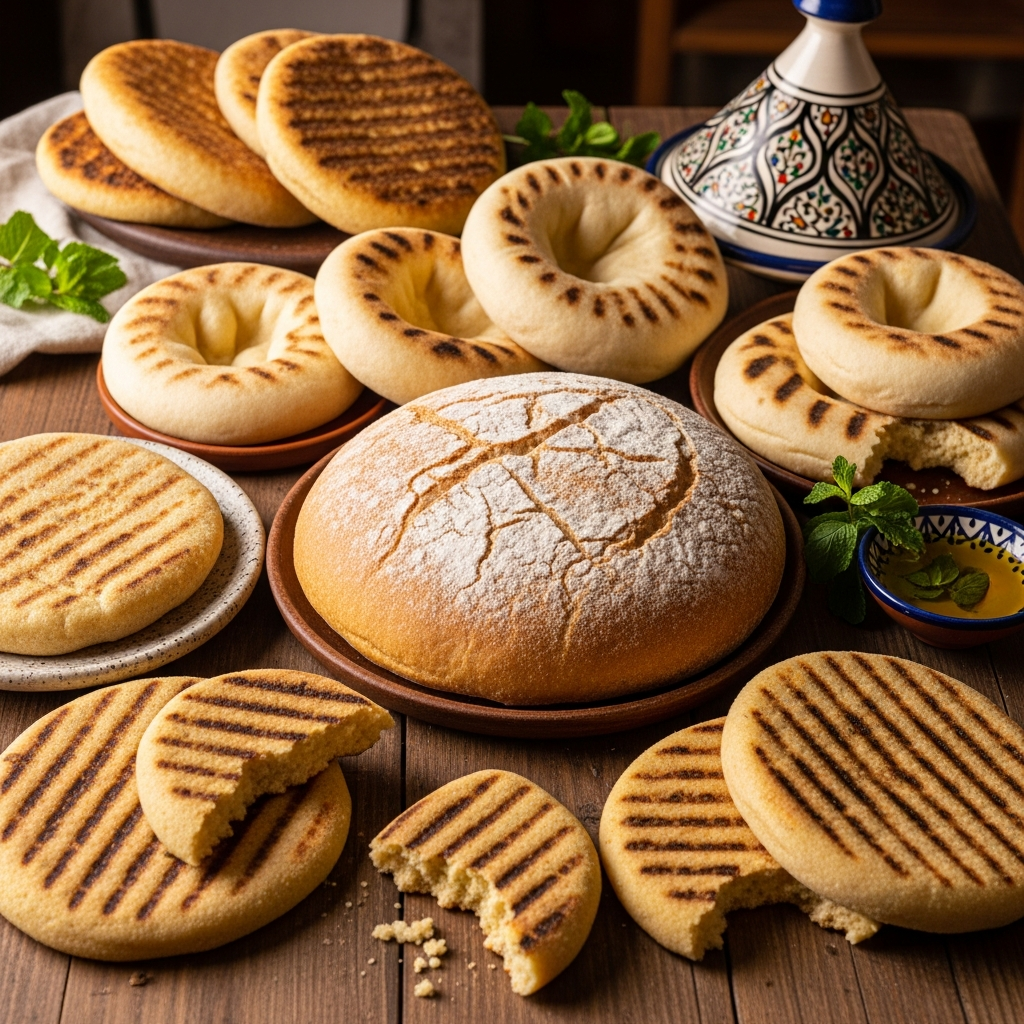
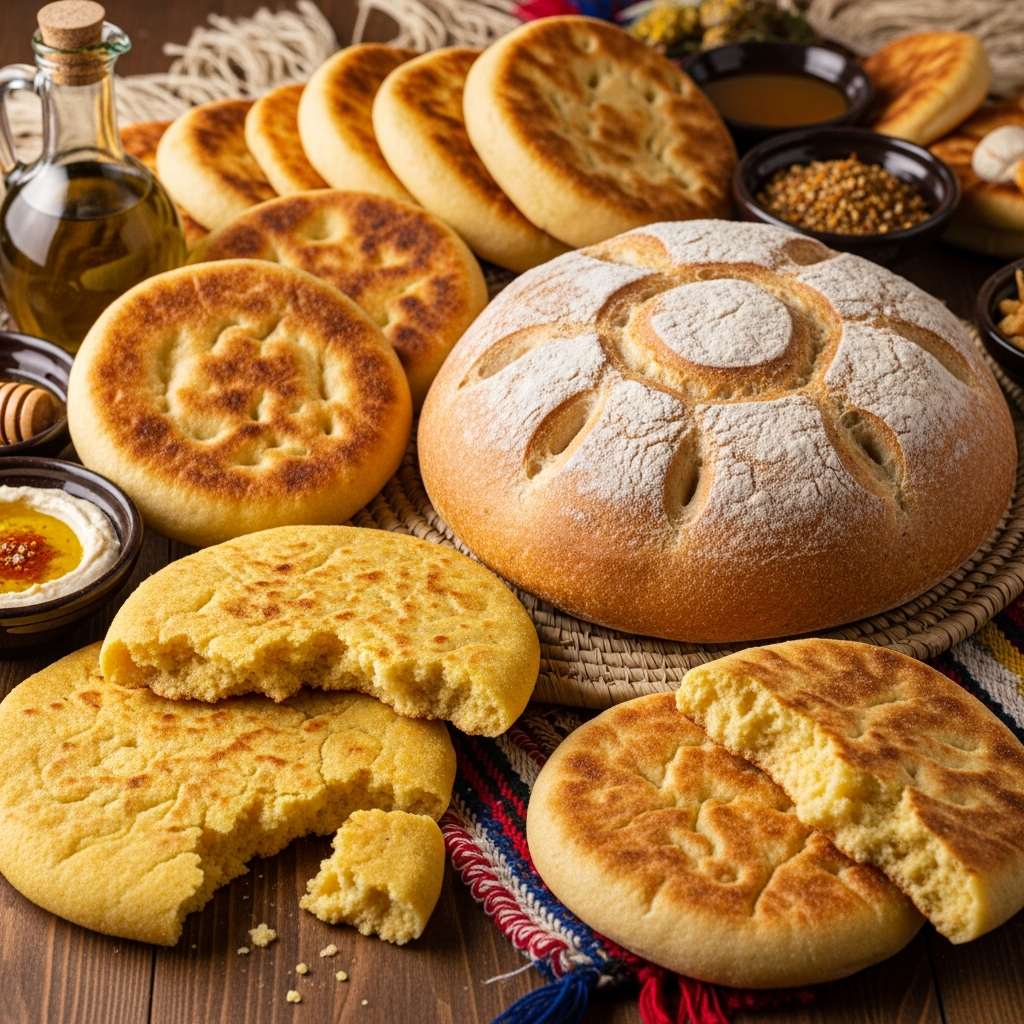
Khobz, also known as lkhobz in Darija (Moroccan Arabic), is a round loaf of bread typically made from a combination of wheat flour and semolina. The proportion of each can vary depending on regional preferences and family recipes, influencing the final texture and flavor. It’s characterized by its slightly crusty exterior and soft, airy interior.
How is Khobz Made?
The process of making Khobz is a labor of love, often passed down through generations. Here’s a general overview:
1. Mixing the Dough: Flour, semolina, salt, yeast (either fresh or dried), and water are combined and kneaded vigorously for a considerable amount of time. The kneading process is crucial for developing the gluten, which gives the bread its characteristic texture.
2. First Rise: The dough is then left to rise in a warm place until it doubles in size. This fermentation process is key to the bread’s flavor and airy texture.
3. Shaping: After the first rise, the dough is gently deflated and divided into round portions. These rounds are then flattened slightly and left to rise again.
4. Baking: Traditionally, Khobz is baked in a communal wood-fired oven called a ferrane. This imparts a unique smoky flavor and a perfectly crispy crust. However, home ovens are also commonly used. Before baking, the loaves are often scored with a knife or sprinkled with semolina for added texture.
Why is Khobz so Important?
Khobz is more than just bread; it’s a cultural touchstone. It’s used to scoop up tagines, soak up flavorful sauces, and is almost always served alongside olives, cheese, and other appetizers. Sharing Khobz is an act of hospitality and a symbol of togetherness. The phrase “bessaha” (meaning “to your health”) is commonly said before partaking in a meal, highlighting the importance of sharing food and good wishes.
Harcha: A Moroccan Semolina Flatbread Delight
Moving beyond Khobz, we encounter Harcha, a delicious and versatile semolina flatbread that’s a popular choice for breakfast or a light snack. Its slightly crumbly texture and subtle sweetness make it a delightful treat enjoyed throughout Morocco.
What is Harcha?
Harcha is a flatbread made primarily from coarse semolina flour, butter or oil, sugar, and a leavening agent (baking powder or baking soda). It’s cooked in a skillet or frying pan, resulting in a golden-brown exterior and a slightly granular interior.
How is Harcha Made?
The preparation of Harcha is relatively simple and quick, making it a popular choice for a last-minute snack:
1. Mixing the Dough: Semolina, melted butter or oil, sugar, salt, and a leavening agent are combined and mixed until just combined. It’s important not to overmix the dough, as this can result in a tough texture.
2. Resting: The dough is allowed to rest for a short period to allow the semolina to absorb the liquid.
3. Cooking: The dough is then divided into small rounds and flattened slightly. These rounds are cooked in a lightly oiled skillet or frying pan over medium heat until golden brown on both sides.
Variations and Serving Suggestions:
Harcha can be customized with various additions, such as orange blossom water for a floral aroma or anise seeds for a subtle licorice flavor. It is often served warm with butter, jam, honey, or cheese. It’s also a popular street food item, enjoyed as a quick and satisfying snack.
Batbout: The Soft and Versatile Moroccan Pita Bread
Another essential entry in the world of Moroccan bread types is Batbout. This soft, pillowy bread, often described as Moroccan pita bread, is incredibly versatile and used in a variety of ways.
What is Batbout?
Batbout, also known as mbatbot or maqrout, is a soft, round bread made from a mixture of wheat flour and semolina, similar to Khobz, but cooked on a griddle or in a heavy-bottomed pan. Its characteristic feature is its hollow interior, making it perfect for stuffing with various fillings.
How is Batbout Made?
The process of making Batbout is similar to that of Khobz, but with a slight variation in the cooking method:
1. Mixing the Dough: Flour, semolina, salt, yeast, and water are combined and kneaded until a smooth and elastic dough is formed.
2. First Rise: The dough is left to rise until it doubles in size.
3. Shaping: The dough is divided into round portions, flattened into discs, and allowed to rise again.
4. Cooking: Instead of baking, Batbout is cooked on a hot griddle or in a heavy-bottomed pan. The bread puffs up during cooking, creating a hollow interior.
Versatility and Fillings:
Batbout’s hollow interior makes it ideal for stuffing with a wide range of fillings. Popular options include:
Kefta: Seasoned ground meat, grilled or pan-fried.
Vegetables: Grilled or roasted vegetables like eggplant, peppers, and zucchini.
Cheese: Soft cheeses like feta or goat cheese.
Spreads: Hummus, baba ghanoush, or other Middle Eastern dips.
Eggs: Scrambled or hard-boiled eggs.
Batbout can also be enjoyed plain, served with tagines, or used as a sandwich bread. Its soft texture and mild flavor make it a crowd-pleaser.
Beyond the Big Three: Exploring Other Moroccan Bread Varieties
While Khobz, Harcha, and Batbout are undoubtedly the most popular Moroccan bread types, the country boasts a rich tapestry of other breads, each with its unique characteristics and regional variations. Here are a few examples:
Beghrir: These are thin, spongy pancakes riddled with tiny holes. They are made from semolina flour and yeast, and cooked on one side only. Beghrir are typically served with honey and butter.
Meloui: These are flaky, layered flatbreads, similar to Indian paratha. They are made from a dough that is repeatedly folded and rolled out with butter and oil.
Rziza: Also known as “judge’s wig,” Rziza is a stringy, noodle-like bread, made by stretching and twisting a dough into thin strands and then cooking it on a griddle.
The Cultural Significance of Moroccan Bread
Bread in Morocco is more than just a source of nourishment; it’s a symbol of hospitality, generosity, and community. Sharing bread is a fundamental part of Moroccan culture, and it’s often seen as a sign of respect and friendship.
Family and Community: The preparation of bread is often a family affair, with different members contributing to the process. Baking bread together strengthens family bonds and passes down traditions from one generation to the next.
Hospitality: Offering bread to guests is a sign of welcome and generosity. No visit to a Moroccan home is complete without being offered a piece of Khobz and a glass of mint tea.
* Religious Significance: Bread also holds religious significance in Islam. It is considered a blessing from God, and wasting bread is frowned upon.
Conclusion: Embracing the Bread Culture of Morocco
Exploring Moroccan bread types is a delightful journey into the heart of Moroccan culture. From the simple yet essential Khobz to the sweet and crumbly Harcha and the versatile Batbout, each bread tells a story about tradition, hospitality, and the importance of sharing. So, the next time you have the opportunity, be sure to savor the taste and experience the cultural richness of Moroccan bread. It’s a culinary adventure you won’t soon forget.